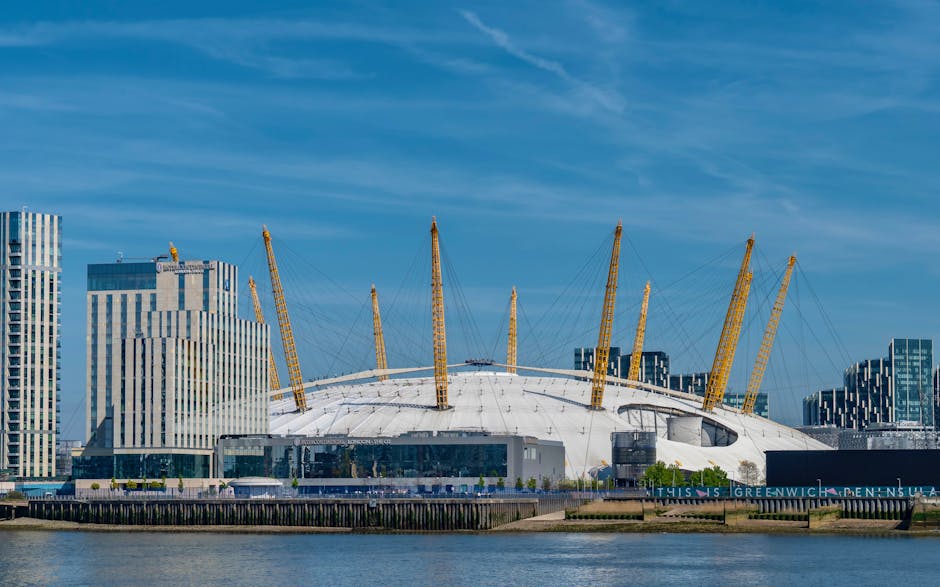
North Greenwich O2 removals for large items and venues
If you have ever tried to move a heavy staging unit, a commercial fridge, a conference screen, or even a piano through a busy riverside venue, you already know the truth: venue removals are not just "bigger house moves." North Greenwich O2 removals for large items and venues need planning, timing, the right vehicle, and a team that understands awkward access, tight loading windows, and the simple fact that one wrong turn can stall the whole day.
This guide breaks down how venue and large-item removals work around North Greenwich and the O2 area, what to expect, where the risks usually appear, and how to choose a practical approach without overcomplicating it. If you are moving one oversized item or clearing a whole event space, you will find a clear path here. And yes, there is a lot to think about - but with the right order of operations, it becomes manageable rather quickly.
Why North Greenwich O2 removals for large items and venues Matters
The North Greenwich and O2 area has its own rhythm. It is busy, high-footfall, and often operating to fixed schedules that leave little room for improvisation. That matters because moving large items in a venue environment is rarely just about lifting something heavy. It is about coordinating access, protecting the building, keeping public areas clear, and making sure the move happens without disrupting staff, guests, or event schedules.
Large-item removals in this setting can include everything from AV racks and exhibition stands to catering equipment, office furniture, shelving, hospitality fixtures, and stage pieces. In a venue, those items often have to move through corridors, lifts, loading bays, or fire routes that were never designed for carefree, last-minute cartwheels. Truth be told, the hard part is usually not the object itself. It is the route.
That is why specialist planning matters. A professional approach reduces damage, speeds up the process, and avoids costly downtime. It also helps when you are juggling other moving tasks too, such as commercial moves, office removals, or broader removal services across Greenwich.
Practical takeaway: venue removals are won before the van arrives. The best results come from route planning, timing, and clear responsibility on the day.
How North Greenwich O2 removals for large items and venues Works
Most successful large-item venue moves follow a similar pattern, even though every site has its own quirks. First comes the survey, then the access plan, then the packing or protection stage, then loading, transport, and final placement. Simple on paper. A bit more involved in real life.
The first step is usually to assess the item and the environment. A heavy boardroom table is not difficult because it weighs a lot; it is difficult because it may need to rotate in a narrow hallway, pass under a low ceiling, and keep clear of glass partitions. In venues, you also need to think about loading zones, lift dimensions, flooring protection, and whether the item can be dismantled safely before movement.
For some jobs, a man and van style solution is enough. For bigger loads, you may need a moving truck or even removal truck hire. That depends on how many items are involved, how fragile they are, and whether the venue has strict time slots for access.
Packaging and protection are not optional. Corners chip. Screens scratch. Polished tables mark easily. You will often see good crews using blankets, straps, trolleys, ramps, protective wrap, and floor covering to keep the job tidy. If the move is linked to a larger event changeover, it may also make sense to use packing and boxes or packing and unpacking services for the smaller supporting items.
When the job is complete, the most professional teams do a final check: routes cleared, item condition confirmed, and any waste or packing materials removed responsibly. That sounds minor, but it is often the detail clients remember.
Key Benefits and Practical Advantages
Using a specialist service for North Greenwich O2 removals for large items and venues is not just about convenience. It creates a cleaner, safer, and more predictable process.
- Less disruption: carefully timed removals reduce impact on guests, staff, and event schedules.
- Lower damage risk: trained handlers know how to move bulky, awkward, or delicate items without forcing them.
- Better access management: venue-friendly teams understand loading bays, visitor flow, and restricted access points.
- More efficient labour: the right number of people, in the right positions, usually beats brute strength every time.
- Improved accountability: a professional removal plan creates clearer responsibility for damage prevention and timing.
- Cleaner handover: proper clear-up and waste handling save time at the end of a long day.
There is another benefit that is easy to overlook: calm. If you are running a venue, managing a build, or coordinating a venue refresh, you already have enough moving parts. A well-run move gives you one less thing to chase around by email at 7:45 in the morning.
If your project is tied to a wider business transition, a look at office relocation services can also be helpful, especially where venue admin spaces, back-of-house areas, or support offices are being reorganised at the same time.
Who This Is For and When It Makes Sense
This type of move is for anyone handling large, heavy, fragile, or high-value items in or around a venue setting near North Greenwich. That might include venue managers, event producers, hospitality teams, production crews, facilities managers, retail fit-out teams, or landlords preparing a space for a new tenant.
It also makes sense when:
- the item will not fit safely in a standard car or small van;
- the access route is tight, shared, or public-facing;
- the item must be moved at a specific time;
- you need to keep the building open during the move;
- there is a risk of scratching walls, lifts, flooring, or doors;
- the item needs two or more people to handle it safely.
For smaller jobs, you may only need a straightforward removal van or a flexible man with van arrangement. For larger venue clearances or more structured commercial work, it is usually smarter to plan around the requirements of the site rather than the other way around.
And if the job involves a busy commercial schedule, pairing it with same day removals can be useful in time-sensitive situations, though only when access and staffing are properly lined up. Same-day does not mean no planning. That part is important.
Step-by-Step Guidance
- List every item to be moved. Include size, weight, fragility, and whether it can be dismantled. A rough list is better than none, but a detailed list saves time later.
- Check the site access. Measure doorways, lifts, stairwells, loading bays, and any awkward turns. Venues are full of surprises. Some obvious, some not.
- Decide what needs protection. Floors, walls, corners, screens, and glass should be protected before anything starts moving.
- Choose the right vehicle and crew. A small item may be fine with a man with a van, while a larger job may need a bigger vehicle or a truck-based setup.
- Plan the timing carefully. Avoid peak footfall where possible. Early morning, evening, or off-event windows are often best.
- Prepare the items. Remove loose parts, unplug equipment, label cables, and wrap delicate surfaces.
- Load methodically. Heavy items should be secured first, with fragile pieces protected and strapped so they cannot shift.
- Confirm delivery or placement. Make sure the destination space is ready, clear, and accessible before the vehicle leaves.
- Close the job properly. Check for damage, remove packing waste, and confirm nothing has been left behind.
If the job involves furniture disposal or replacement, you may also need furniture removals or even furniture pick up for items that are being cleared rather than reinstalled.
Expert Tips for Better Results
After enough venue moves, a few patterns become obvious. The first is that good prep always pays off. The second is that the smallest detail can save the most time. A cable tied properly. A lift booked in advance. A loading bay kept free. Tiny things, yes. Also the difference between a smooth morning and a mildly chaotic one.
Use labels before you need them. Label items, parts, and cable groups clearly, especially if equipment will be rebuilt later. A "left speaker" that turns into "which speaker?" is a classic time drain.
Measure twice, move once. It sounds almost too simple, but it stops a lot of avoidable stress. If a board, cabinet, or display unit is even slightly too wide, the problem is usually discovered at the most inconvenient point imaginable.
Keep one person in charge. Not every move needs a committee. In fact, committees are quite bad at lifting wardrobes. A single point of contact speeds decisions and keeps instructions consistent.
Build in a buffer. Traffic, lift delays, and access checks can all take longer than expected. A little slack in the schedule helps more than most people realise.
Use storage if timing is awkward. When venue handover dates do not line up neatly, short-term storage can bridge the gap and keep the project from stalling.
One more thing: if your move is part of a wider building or business transition, it can be worth comparing a few service styles. Not every project needs the biggest vehicle or the largest crew, but every project does need the right fit. That is the real win.
Common Mistakes to Avoid
Venue and large-item removals go wrong in fairly predictable ways. The good news is that most of them are preventable.
- Underestimating access: a clear path on paper is not the same as a usable path on the day.
- Ignoring weight distribution: heavy items can shift in transit if they are not loaded correctly.
- Forgetting hidden parts: detachable shelves, casters, cables, and fixings often cause delays when they are not prepared in advance.
- Leaving protection too late: once a scratch happens, it is already a problem.
- Choosing the wrong vehicle: squeezing a large job into the wrong setup usually creates more handling, more trips, and more risk.
- Not checking venue restrictions: some sites have specific loading times, routes, or noise expectations.
- Trying to do too much at once: if the move, the setup, and the clear-up all collide, the whole day can unravel a bit.
There is also a common mindset mistake: treating a large-item move like a domestic pickup. A venue is different. The stakes are different, the access is different, and the consequences of delay are usually bigger. That does not mean it has to be difficult. Just respectful of the setting, that is all.
Tools, Resources and Recommendations
You do not need a warehouse of specialist kit for every job, but the right tools make a huge difference. For large-item removals, the most useful equipment usually includes removal blankets, straps, dollies, trolleys, ramps, protective wrap, gloves, and floor protection. If the item is particularly delicate, corner guards and extra padding become a very good idea.
From a planning point of view, keep a simple site sheet with these details:
- exact pickup and delivery addresses;
- contact names and mobile numbers;
- access times and any security requirements;
- lift dimensions if relevant;
- parking or loading instructions;
- item list with notes on fragility and dismantling;
- any insurance or approval notes from the venue.
It also helps to know where your wider service needs sit. For example, if the move is linked to a workplace clear-out, office removals may be the more relevant route. If the job is part of a private move after an event-related tenancy change, house removals or home moves may be more appropriate. Matching the service to the actual job keeps costs and complexity under control.
If you want to understand the company's approach to safety and trust, pages like insurance and safety, health and safety policy, and recycling and sustainability are sensible starting points. These are the kinds of details people usually wish they had checked earlier.
Law, Compliance, Standards, or Best Practice
For venue and commercial removals, the key principle is simple: move safely, plan responsibly, and follow the site rules that apply to your location and operation. In the UK, that often means taking health and safety seriously, making sure lifting is sensible for the people involved, and confirming that vehicles, access routes, and storage arrangements are suitable for the load.
For businesses and venue operators, best practice usually includes clear risk assessment, good communication, competent handling, sensible manual lifting, and appropriate insurance cover. That is especially important when items are heavy, awkward, or valuable. If an item could be damaged easily, or if moving it could affect the public or staff, then the project needs more care rather than less.
Environmental practice matters too. Venue work often generates packaging, broken-down fixtures, and redundant furniture. Responsible disposal and reuse should be considered early rather than left to the end. Where possible, rehoming or recycling furniture is usually better than simply treating everything as waste. The approach set out on the site's recycling and sustainability page reflects that sensible direction.
Also worth mentioning: any move involving contractors, venue managers, or multiple stakeholders benefits from written instructions. Not because paperwork is glamorous. It really isn't. But because written instructions reduce confusion when the day gets busy and everyone is talking at once.
Options, Methods, or Comparison Table
There is no single best way to handle every large-item or venue move. The right method depends on volume, access, timing, and how delicate the items are.
| Method | Best for | Strengths | Limitations |
|---|---|---|---|
| Man and van | Smaller large-item moves, quick local jobs | Flexible, often efficient, good for modest loads | May not suit bulky, multiple, or highly fragile items |
| Removal van | Single-room clear-outs or light commercial loads | Practical for local transport and short notice | Limited capacity for larger venue jobs |
| Moving truck | Bulkier loads or multi-item venue clearances | More capacity and better for structured loading | Needs suitable access and parking |
| Truck hire with crew | Complex venue projects or larger dismantled items | Useful for coordinated loading and transport | Higher planning needs, especially around timing |
| Storage plus staged move | When handover dates do not align | Reduces pressure and helps bridge scheduling gaps | Adds an extra step and more coordination |
For many customers, the real decision is not between "small" and "big" - it is between "simple enough" and "needs proper coordination." That is why it helps to speak plainly about the load from the start. The more honestly you describe the job, the better the recommendation will be.
Case Study or Real-World Example
A venue manager in North Greenwich needs to move a set of large display plinths, several heavy tables, and a few fragile back-of-house items after a weekend event. The space is still open to the public for part of the day, so the move has to happen early, quietly, and without blocking the main entrance.
Instead of trying to shift everything in one rush, the team breaks the move into stages. The plinths are measured, wrapped, and assigned to two handlers. The tables are checked for removable legs. The back-of-house items are boxed separately so cables and accessories do not disappear into the usual black-hole of "we'll sort that later." The loading bay is booked, the route is cleared, and the items are taken out in an order that matches the destination space.
The result is not dramatic. That is the point. No damaged walls, no last-minute scrambling, and no panicked hunt for a missing bracket under a chair. Just a calm move, finished on time, with the venue ready for the next shift in use. To be fair, that is what a successful removal should look like - quiet competence.
If the same venue had also needed office furniture removed or reconfigured, a combination of office relocation services and furniture removals would have made sense. The lesson here is that the right service mix matters more than choosing the first available option.
Practical Checklist
Use this checklist before the move starts:
- All large items listed and measured
- Any fragile items clearly marked
- Access route checked, including lifts and stairs
- Loading or parking permissions confirmed
- Items dismantled where needed
- Cables, loose fittings, and small parts packed separately
- Floor and wall protection ready
- Vehicle size matched to the job
- Team knows the timetable and contact person
- Destination space ready for delivery or installation
- Insurance and safety expectations reviewed
- Waste, packaging, and old fixtures accounted for
If you want to go one step further, add a final 10-minute walk-through before the vehicle departs. It catches the silly little misses. And there is always one, usually hiding near a plug socket or under a table edge.
Conclusion
North Greenwich O2 removals for large items and venues work best when the move is treated as a controlled process, not a last-minute lift-and-go task. The right planning keeps people safe, protects valuable equipment, and helps the venue keep moving without unnecessary interruption. Whether you are moving one oversized item or clearing an entire event space, the fundamentals stay the same: measure carefully, protect the route, choose the right transport, and keep communication tight.
That mix of organisation and calm is what makes the difference. Not flashy, just effective. And in venue work, effective is exactly what you want.
Get a free quote today and see how much you can save.
Frequently Asked Questions
What counts as a large-item removal in a North Greenwich venue?
Anything too bulky, heavy, awkward, or fragile for a normal small move can count as a large-item removal. In venue settings, that often includes furniture, AV equipment, staging, display units, catering gear, or oversized storage pieces.
Do I need a specialist team for O2-area removals?
Not every job needs a specialist crew, but if access is tight, the item is valuable, or the timing is fixed around events, specialist handling is usually the safer choice. Venue environments reward planning more than improvisation.
Can large items be removed without disrupting the venue?
Yes, often they can. The key is to schedule the work around quieter periods, protect the route, and keep the move controlled. Early morning or off-event windows are commonly the easiest.
Is a man and van enough for venue removals?
Sometimes. A man and van or man with van setup can work for smaller items, but bigger venue jobs usually need more capacity and better load planning.
What should I do before the movers arrive?
Measure the items, clear the route, pack loose parts, and confirm access details. It also helps to identify one decision-maker on site so instructions do not get repeated or contradicted.
How do I protect floors and walls during a large-item move?
Use floor coverings, padding, blankets, and corner protection where needed. Good teams also move slowly through tight areas rather than forcing a heavy piece through a gap that is a bit too narrow.
What if I need to store items before or after the move?
That is where storage can help. It is especially useful when fit-out dates, event schedules, or handover times do not line up neatly.
Can furniture from a venue be recycled or reused?
Often yes, depending on condition and item type. Responsible furniture handling is part of good practice, and it is worth checking options before assuming everything must go to waste.
How far ahead should I book a venue removal?
The earlier the better, especially if access depends on venue schedules or if the move needs to happen outside normal hours. That said, urgent jobs can sometimes be handled with a same day removals approach if the scope is manageable.
What insurance or safety checks should I ask about?
Ask how items will be handled, what protection is used, and whether the team has suitable cover for the job. It is also sensible to review the company's insurance and safety information before booking.
Are venue removals different from office removals?
Yes, though there is overlap. Venue removals often involve public-facing access, event timing, and more varied item types. Office removals are usually more linear and workspace-focused.
What is the biggest mistake people make with large-item removals?
Underestimating the access route. The item itself is only half the job; the path out, the vehicle loading, and the destination handover usually matter just as much, if not more.
And if you are still weighing up the best approach, start with a clear list of items and a realistic look at access. That one small step tends to solve a surprising amount of uncertainty. Then the rest falls into place, one calm move at a time.